Have you heard a soft coo-OO-oo outside your window? You may have a mourning dove nearby! These gentle-looking birds have some surprising abilities. Come discover what makes them so special.
Explore more with the free Mourning Dove printable below.
Little bird, big surprises
Did you know?
Mourning doves are common across much of North America, but there's more to them than meets the eye. Here are eight things to listen for, look for, and wonder about.
FACT 01 • THE SOUND
Why do mourning doves coo?
Their soft, mournful-sounding call gives mourning doves their name. Males often coo to attract a mate or announce their presence. Listen for a gentle, repeating coo-OO-oo-oo.
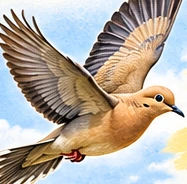
When a mourning dove takes off, its wings can make a sharp whistling sound. The noise comes from air moving across its wing feathers—not from the bird's voice.
Mourning dove recording with wing whistle near the end, shared via Bug Woman (original recording XC153648). Playback depends on the external audio host.
FACT 03 • FLIGHT
Faster than you might think
Despite their calm appearance, mourning doves are strong, swift fliers. They can reach speeds around 55 miles per hour in flight.
55miles per hour
FACT 04 • IDENTIFICATION
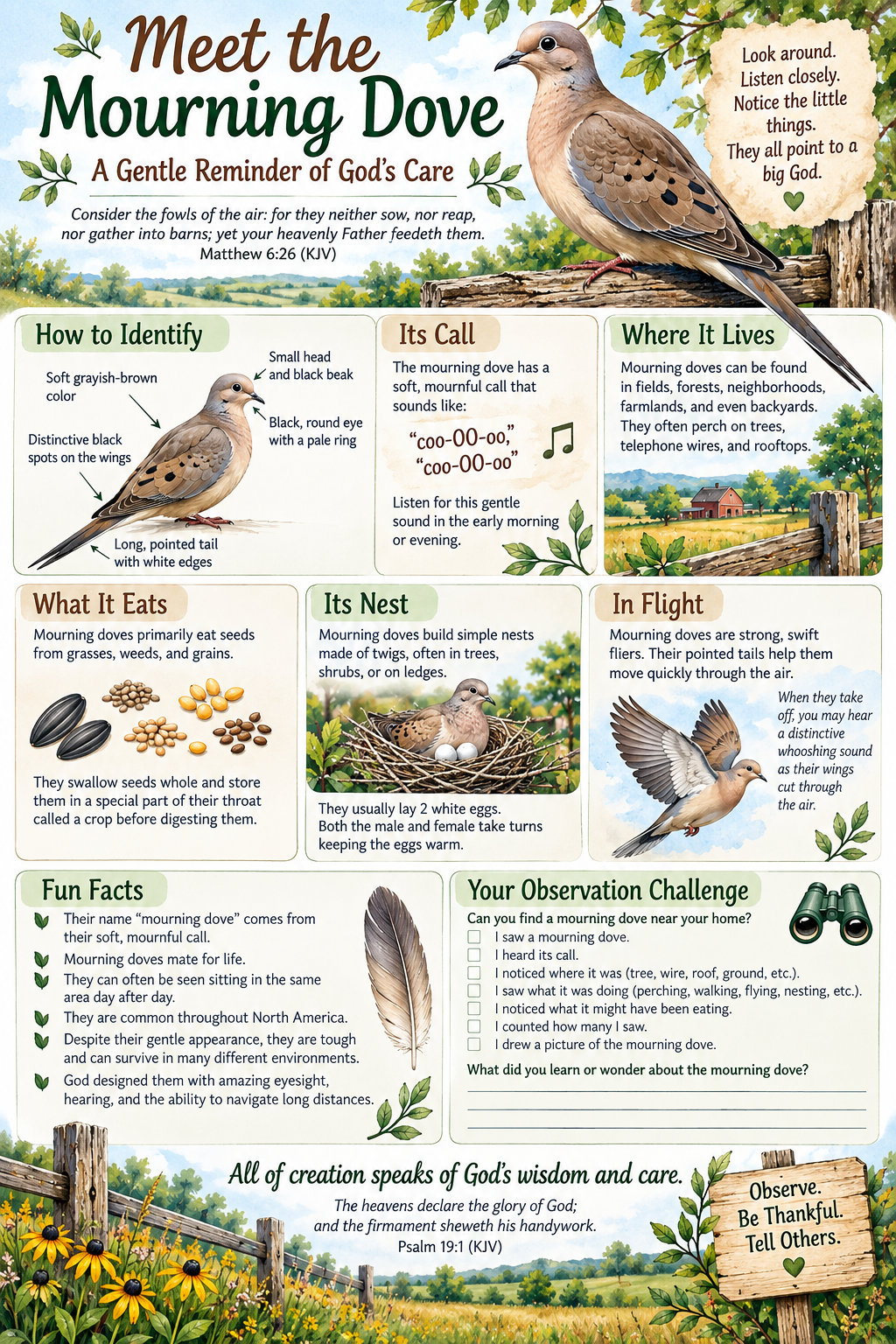
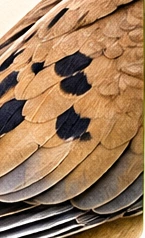
Look for the little black spots
Notice the small dark spots on their wings, the long pointed tail, and the warm gray-brown feathers. These clues can help you recognize a mourning dove in your backyard.
Look closely at the dark spots along the folded wing.
FACT 05 • NESTING
A surprisingly simple nest
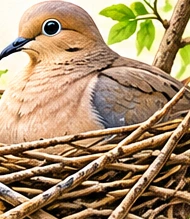
Mourning doves often build rather loose platforms of twigs. Their nests may look delicate, but both parents take turns caring for the eggs and young.
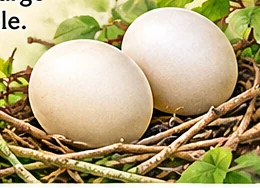
A simple platform of twigs makes a home for the young.
FACT 06 • FAMILY
Usually two eggs
A mourning dove usually lays two white eggs in a clutch. Both parents help incubate them, and both care for the chicks after they hatch.
FACT 07 • BABY BIRDS
What do baby doves eat?
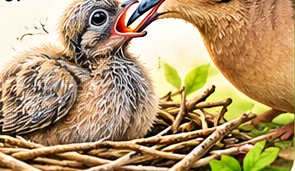
At first, young mourning doves are fed a nutritious substance called crop milk, produced in the lining of their parents' crops. Both the mother and father can provide it.
Both parents can feed their growing chicks.
FACT 08 • FOOD
Seeds are on the menu
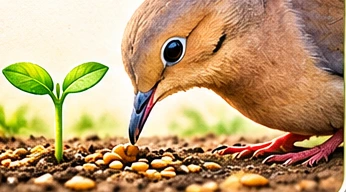
Mourning doves eat mostly seeds, often searching for them on the ground. Watch them walking along lawns, paths, or beneath bird feeders.
A tiny seed, a new sprout, and a curious dove.
Try this together
Backyard Dove Detective
Take a few quiet minutes outdoors. Can you discover a mourning dove without disturbing it?
Listen for its gentle cooing call.
Look for black wing spots and a long, pointed tail.
Watch how it walks and searches for seeds.
If it flies away, listen for the wing whistle.
Sketch what you noticed or write down one new question.
Remember: Observe nests and baby birds from a distance, and leave them undisturbed.
A moment to wonder
Consider the works of His hands
A familiar bird can become a reminder to pay attention. Its wings, its call, and the care given to its young invite us to notice the detail and variety in God's creation.
What ordinary thing might you look at more closely today?
“O LORD, how manifold are thy works! in wisdom hast thou made them all: the earth is full of thy riches.”
PSALM 104:24 • KJV
Keep exploring
Take the discovery with you
Want a simple nature-study activity to enjoy with children, grandchildren, or a classroom? Download the existing Meet the Mourning Dove printable from the Free Resources collection.
Free Mourning Dove Printable
Identification, bird facts, and an observation challenge—all in one resource.